SEC Code Glossary: A Quick Guide to Entry Class Codes

In the world of electronic payments, the National Automated Clearing House Association (NACHA) governs and dictates the regulations for processing electronic transactions through the Federal Reserve. The regulations are serious, utilized in legal proceedings regarding transactions and relied upon by banks, payment processors, and both federal and state governments. NACHA keeps the order for the industry, and it’s important to abide by every one of its regulations.

Whenever a transaction is submitted, NACHA needs an SEC code along with it.

What Is an SEC Code?

SEC stands for “Standard Entry Class” and is a code that denotes the way a customer authorizes a payment. When you apply for payment processing, sometimes you will find that certain types of payment methods are associated with lower costs. An SEC code tells you or the entity involved in the transaction what type of transaction you’re dealing with. Using the right code helps everyone stay regulation-compliant and accurate. Incorrect codes can lead to errors, delaying or even rejecting payments. Mastering SEC codes ensures payments move smoothly and securely around the world.

Common SEC Code Meanings

There are dozens of SEC codes out there, each with its own meaning. Let’s take a look at some of the most common codes to help you navigate this world.

POS/POP

Point-of-Sale (POS) and Point-of-Purchase (POP) entries refer to single debit payments made in-person via credit/debit card (POS) or converted check (POP). Both the card and the check are used to record the account information in association with the payment, and the original payment method is then returned to the customer.

PPD

Prearranged Payment and Deposit (PPD) refers to Direct Deposit entries and any Preauthorized Bill Payment applications. In this way, these payments can be both debits or credits (meaning funds can be removed or deposited into an account) and either single or recurring (occurring as a one-time payment or scheduled multiple payments).

WEB

A Internet Initiated Entry (WEB) is simply any debit via the Internet. These entries may be single or recurring.

The receiver must authorize these debits via the Internet. In other words, if the authorization was actually received in person, via U.S. Mail or by phone, for example, even to suffice for a payment from the Internet—it’s not really a WEB entry.  However the authorization was received is how the transaction must be classified via the SEC code.

Also, bear in mind that you may only initiate a credit here as a reversal of a WEB debit. You can’t submit a credit using the WEB entry code.

TEL

Telephone Initiated Entry (TEL) entries are single debit entries authorized via the telephone. In this oral authorization entry there must be a pre-existing relationship between the receiver (person authorizing the payment) and originator (person/entity receiving the payment). If there is no relationship already in place, then the receiver has to make the phone call.

Additionally, all TEL transactions have to be recorded and kept on file for a minimum of two years from the date of the transaction. If the transaction is not recorded, then the originator needs to provide the receiver with a written notice that confirms the oral authorization before the payment settles.

CCD

The SEC code Corporate Credit or Debit (CCD) is also known as “Cash Concentration or Disbursement.” A CCD payment is either a credit or debit – and occurs specifically between corporate entities. It can be a single entry or recurring.

All business bank account transactions are listed under this SEC code. Prior to the transaction date, a signed authorization must be obtained either separately or included in the contract between the businesses.

ARC

An Accounts Receivable Entry (ARC) is defined as a check conversion that is originally received via the U.S. Mail. This includes the United States Postal Service (USPS), as well as courier services like FedEx and UPS. According to NACHA, this does not include personally delivered or night drop-box items. Corporate checks are also not included.

CTX

Corporate Trade Exchange (CTX) entries are initiated by originators to pay or collect their obligations. The funds are transferred to other organizations and so mirror the same business entity requirements as the CCD entry code. Both credits and debits are allowed.

RCK

The Represented Check Entry (RCK) entry refers specifically to single debits that occur as a result of check representment. Check representment occurs after an item is returned Non-Sufficient Funds (NSF) or is bounced. The service will simply represent the check at a later, scheduled date after it is returned. Some businesses choose to initiate check representment in order to attempt to recollect their funds. For merchants that use RCK entries, a notice must be displayed visibly at the POS.

BOC

Back Office Conversion Entry (BOC) entries are single debit entries that are initiated by source documents (checks) received at POP or staffed bill payment locations (in-person). These checks are collected first and then converted to ACH transactions during back-office processing.

CIE

A Customer Initiated Entry (CIE) is a credit initiated usually through a bill payment service by an individual. These are meant to pay an obligation.

XCK

The Destroyed Check Entry (XCK) refers to a replacement entry that is initiated when an original check is unreadable, lost or destroyed and cannot be processed.

SHR

A Shared Network Transaction (SHR) is used for transactions at POS terminals in shared networks. Debit card transactions at retail stores are examples of an SHR. The SHR then supports transactions between the customer, bank and merchant.

MTE

Machine Transfer Entry (MTE) codes are used when someone initiates an ACH transition at an Automated Teller Machine (ATM). The MTE code tells the relevant entities that the fund transfer, withdrawal or deposit happened at an ATM.

IAT

International ACH Transaction (IAT) codes appear with financial institutions outside the United States. Any transactions that occur across borders are subject to international payment regulations, and the IAT code ensures compliance with international screening requirements.

ENR

Automated Enrollment Entry (ENR) codes are often used by federal agencies to enroll their customers in direct deposit programs, such as Social Security or veterans’ benefits. They simplify the enrollment process.

COR

Notification of Change or Refused Entry (COR) codes come into play when ACH codes are corrected or changed. Any outdated or incorrect account numbers that need changing are adjusted and sent with the COR code. The COR code tells the original entity there was an ACH transaction error. COR codes keep ACH transactions accurate without extra delays.

DNE

Government agencies use Death Notification Entry (DNE) codes to inform financial institutions of an account holder’s death. These codes are needed to terminate benefit payments sent to the account holder.

ADV

Automated Accounting Advice (ADV) codes are only used by financial institutions. They help them track ACH entries and keep their records accurate.

ACK

The Acknowledgment Entry (ACK) code gives the original company a transaction receipt. When corporations complete transactions, the transaction’s originator can ask for acknowledgment of successful payment. The ACK code lets them know their funds were transferred successfully.

Streamline Your Payments With CSG Forte

Navigating the complexities of SEC codes and payment processing is challenging. How do you keep everything accurate, compliant and secure on your own? CFG Forte is your partner in simplifying the payment process without sacrificing scalability and reliability.

At CSG Forte, we’ve spent over 20 years perfecting our payment approach. Our comprehensive suite includes built-in Payment Card Industry (PCI) compliance, tokenization and encryption, keeping you secure and compliant.

Choosing the right SEC codes is just the first step. As your partner, we’ll give you the tools and support needed to streamline payment processing. With CSG Forte, you can access a secure, cloud-based platform that turns payments into a profit center. Ready to simplify your payment processes? Contact CSG Forte today to see how we can advance your payment strategy!


The 5 Biggest Payment Processing Headaches for ISVs (and How to Relieve Them)

As independent software vendors (ISVs) know too well, there is a lot more to offering payments than just accepting and processing them. Payment processing is fraught with complexities for ISVs that are trying to keep their customers happy. Besides the transactions, ISVs must figure out how disputes and chargebacks will be handled, for example, or how customers will be protected from fraud. These challenges can affect the overall customer experience (CX), making it essential for ISVs to find effective payment solutions to integrate into their software.

That’s why choosing the right payments partner is imperative for ISVs that want to alleviate those payment processing headaches. In fact, offering an easy-to-navigate, reliable and secure payments platform can turn what are often seen as challenges into seamless, customer-retaining experiences. Let’s unpack five common payments headaches and how to relieve them.


1. Onboarding

Headache: Ensuring new customers experience a smooth and efficient setup is crucial for building customer loyalty from the get-go. However, onboarding often involves numerous steps, including KYC (know your customer) compliance, data integration and system configuration. Any hiccups in this process can lead to frustration and even delay the customer’s ability to start accepting payments promptly.

Solution: A reliable payments partner can streamline the onboarding process by offering automated solutions that reduce manual effort and minimize errors. One example of such automation is the streamlined onboarding process with automated verifications. This system automatically verifies the identity of new customers using various databases and compliance checks, ensuring that the onboarding process is both secure and efficient. By leveraging advanced technologies and a well-defined onboarding strategy, an experienced and knowledgeable payments provider ensures that new merchants are up and running quickly and efficiently while protecting you by filtering bad actors.


2. Risk Management

Headache: ISVs must navigate a rapidly evolving landscape filled with potential threats. For example, an ISV might face penalties for non-compliance with PCI DSS regulations, which mandate security measures for handling cardholder data. Failure to comply could lead to hefty fines, increased audit requirements and even the loss of the ability to process credit card payments altogether. Failure to effectively manage these risks can result in financial losses, legal issues and damage to ISVs’ reputations.

Solution: The best payment partners offer comprehensive solutions that include real-time fraud detection, and compliance monitoring. These tools help ISVs protect their merchants and maintain a secure payment environment.


3. Dispute Management

Headache: Managing chargebacks and customer disputes can be time-consuming and complex. Disputes can also generate a lot of call center inquiries, which can strain company resources and impact the overall customer experience.

Solution: By providing streamlined dispute resolution processes and expert support, a great payment partner can help ISVs manage chargebacks more effectively and reduce the impact on their merchants. For example, their software might include automated chargeback management tools that notify the merchant of a dispute, allow the upload of necessary documentation, and assist by providing easy access to details and context to challenge the chargeback. Depending on the needs of the ISV and their own systems, having direct integration methods, such as REST API resources for disputes, can provide greater flexibility and scalability. This allows ISVs to focus on their core business activities while ensuring positive CX and improving retention.


4. Fraud Prevention

Headache: Fraud prevention is a top priority for ISVs, as fraudulent activities can result in significant financial losses and damage to their reputation. Implementing robust fraud prevention measures requires advanced technologies, continuous monitoring, and compliance knowledge. Some specific examples of fraud types ISVs need to watch out for include:

  • Card-not-present (CNP) fraud: This occurs when fraudsters use stolen credit card information to make purchases online or over the phone, without the physical card being present.
  • Chargeback fraud: Also known as “friendly fraud,” this happens when a customer disputes a legitimate transaction, often with the intention of getting goods or services for free.
  • Phishing scams: Fraudsters use deceptive emails or websites to trick individuals into providing sensitive information, such as login credentials or credit card numbers.
  • Account takeover (ATO): This involves fraudsters gaining unauthorized access to a user’s account, often through phishing or data breaches, and using it to make fraudulent transactions.
  • Identity theft: Criminals use stolen personal information to create fake accounts or make unauthorized transactions, posing as legitimate customers.

Solution: A payments provider that offers reliable fraud prevention solutions can help ISVs mitigate this risk. These solutions typically include machine learning algorithms, real-time transaction monitoring and multi-layered security protocols.


5. Customer Support

Headache: When merchants encounter issues with their payment platform, receiving inadequate support can exacerbate the problem, leading to frustration, delayed resolutions and potential financial losses. ISVs need the capabilities to provide swift and effective help when things go awry for their customers. Quick service restoration is imperative to keep any business running smoothly, and shortcomings in support can lead to interruptions in platform functionality, setting off a cascade of customer service issues.

Solution: ISVs must offer quality, consistent and knowledgeable customer service, provide comprehensive training materials and resources and implement a reliable system to track and resolve issues promptly. By ensuring that merchants have access to expert support whenever they need it, ISVs become a partner in improving customer satisfaction, thereby building loyalty and reducing operational disruptions.

Payment processing can be challenging for ISVs. But getting it correct is worth it—83% of ISVs said they’ll see an increased revenue share from payment acceptance over the next 12 months. By partnering with a reliable payment provider, ISVs can transform these headaches into seamless, customer-retaining experiences.

Looking to alleviate pain points in onboarding, risk, fraud, dispute and elsewhere? Contact an expert at CSG Forte to learn more about how we can help you enhance your payment processing capabilities and provide a seamless experience for your merchants.

Navigating the Complexities of Payment Processing in Government Institutions

Constituents demand seamless online experiences, and that extends to payments they make to government agencies. Discover the challenges associated with collecting government payments, and explore government payment solutions that will help streamline your operations.

6 Challenges of Government Payments

When setting up a payment processing solution, government organizations must manage compliance, security, system integration and more—all while making the system easy to use. As a result, they might face the following challenges:

1. Protecting Constituents From Fraud

There are two significant concerns when it comes to security for government organizations collecting payments—losing funds and losing trust.

First, there’s the impact on your financials. The Association for Financial Professionals (AFP) reports that 80% of organizations were targets of fraud in 2023, up 15 percentage points from 2022. Additionally, around 30% of the organizations that lost money due to fraud were unable to recover any of the funds.

Further, there’s the impact on your constituents. In 2023, data breaches impacted more than 353 million people. To ensure your constituents feel comfortable paying taxes, penalties or other fees online, you must prioritize cybersecurity. Here’s how:

  • Require two-factor authentication (2FA) or biometric authentication to better secure constituents’ accounts.
  • Replace sensitive data, such as credit card numbers, with randomly generated tokens.
  • Disguise card data during payment transmission.
  • Set up hosted payment pages to ensure your organization doesn’t hold onto data unnecessarily.

2. Adhering to Compliance Standards

Meeting compliance standards keeps data safe. One of the most significant is the Payment Card Industry Data Security Standards (PCI-DSS), which applies to any organization that collects cardholder data. You can complete your own compliance assessment on the PCI website, validate your compliance through a third-party Qualified Security Processor (QSA), or enroll in a PCI-DSS compliance program.

Federal agencies that collect cardholder information must also comply with Office of Management and Budget (OMB) guidelines on personally identifiable information (PII). Maintaining compliance builds trust with constituents and reduces the risk of data breaches and other security threats.

3. Keeping Track of Data

Given the volume of transactions, tracking payment data can be challenging. With a reliable payment processing solution, your organization can access transaction breakdowns and insights into payment methods. You can analyze general data or dive deeper into the specifics by looking at specific transactions.

4. Accepting Multiple Types of Payments

Your platform should allow you to accept multiple types of online payments, including:

Multiple payment options give constituents more flexibility and allow them to make convenient payments. You can also expand your offerings with multichannel payment processing, including:

  • IVR solutions: Accept payments with a pay-by-phone interactive voice response (IVR) solution. An IVR answering service lets you accept payments 24/7 and is more secure than live agents transcribing card numbers and other payment data over the phone.
  • In-person solutions: Some constituents may prefer making in-person payments or you may need to accept payments at a government office. It’s key that you offer an in-person payment solution that integrates with your digital payment options, making payment on any channel easy.

5. Scaling According to Future Needs

The ideal payment processing solution handles a high number of transactions without disruptions or delays. For example, local governments often see a spike in payments during tax season, and their payment processing solution must be able to scale to meet these inflated annual demands. Additionally, fast-growing municipalities should be able to meet their new residents’ needs.

6. Integrating With Existing Systems

Many government organizations use complex legacy systems or software solutions, which can make integrating payment solutions more difficult. Look for a platform that can integrate with your organization’s current web interface to streamline payments for constituents and simplify operations for you.

Benefits of Digital Government Payments

Reliable digital solutions—such as ACH and credit card processing for government agencies—can streamline your operations, keep constituent data safe and scale according to your future needs. Here are more benefits of implementing digital payment solutions:

  • Expand revenue streams: With online and IVR payment options, your organization can accommodate people who don’t have immediate access to funds by allowing them to pay via credit card.
  • Reduce late payments: Giving constituents more ways to pay may reduce the likelihood of late payments.
  • Receive payments quickly: With a simplified payment processing solution, you can receive payments quickly, which improves cash flow.
  • Receive more data: Gain access to transactional data and identify trends that guide your organization.
  • Devote fewer human resources to processing: With more streamlined operations, your personnel can focus on high-value government initiatives rather than spending excessive time on manual accounting and reconciliations.
  • Simplify tracking: Credit card and ACH processing for government payments provide an easy-to-access payment record that simplifies tracking efforts.
  • Provide an easy payment solution for tourist locations: If your city frequently welcomes international tourists, a digital government payment solution means they will not have to carry local currency and can easily pay for parking or other amenities with a card.
  • Allow constituents to set up automatic payments: Automating government payments gives constituents peace of mind that they will not miss a personal income tax payment, business tax payment or other regular payment.
  • Increase trust with constituents: A convenient, secure and frictionless payment experience increases constituent satisfaction and may increase their confidence in your organization.

How CSG Forte Helps Streamline Government Payments

CSG Forte understands how challenging government payments can be to manage. Our government payment platform enables your organization to manage payments swiftly, whether you’re dealing with local utility payments, state taxes or grant payments.

With our solution, you can accept debit card, credit card, ACH and digital wallet payments. We also allow you to charge constituents a convenience fee to recoup the cost of merchant fees, which you must pay every time an individual pays via a credit or debit card.

You can also explore IVR payment options to provide the utmost convenience for your constituents. Our payment platform is Level 1 PCI-compliant, with features like tokenization and encryption to keep payment data secure and increase trust with your constituents. If you want to integrate your new payment platform with your existing web interface, you can work your way toward successful implementation yourself or receive support from a dedicated integration specialist.

To see how CSG has already helped other government organizations, explore case studies from Lucas County, Ohio, and Kinston, North Carolina.

Contact CSG Forte to Learn More About Forte for Payment Processing

CSG Forte has decades of experience assisting over 81,000 merchants across North America. With our solution, you can reduce administrative burden and rely on a customizable platform that prioritizes security and user-friendliness.

Leave the complexity to us. For more information on implementing CSG Forte at your government organization, talk to a CSG expert today!


Think Outside the Square: How QR Codes reshape payments

From telemedicine to bread baking, there’s a list of things that enjoyed a surge in adoption during the pandemic. For businesses, that includes the use of contactless payments and QR codes—which turned out to be no passing trend.

More than half of U.S. consumers now use some form of contactless payment, according to a Mastercard poll. In 2022, QR code payments accounted for $2.4 trillion in global spend, and that number is projected to keep growing past $3 trillion by 2025.

Previously, QR codes were used mainly for marketing purposes. Now they have found mainstream adoption beyond the pandemic as a tool to facilitate contactless payments. With convenience being a top priority among consumers, QR codes have proven to be a seamless and secure payment method for both businesses and customers alike.

We’ll delve into the benefits of incorporating QR codes into your multichannel payment processes and offer examples on how to effectively implement them, enhancing the payment experience for your customers.


WHAT ARE QR CODES?

QR (short for “quick response”) codes are two-dimensional barcodes that store information in a readable pattern. Traditional barcodes can only hold limited data like product numbers. QR codes, with their added dimension, can store various types of information including URLs, contact information and payment details (e.g., an invoice).

QR codes encode data into a grid of black squares on a white background, which can then be scanned by a smartphone or QR code reader. The scanning device then instantly accesses the encoded information, letting users quickly access websites, make payments or retrieve other information automatically.

You can think of QR codes as a bridge between physical and digital commerce. They offer a quick way to interact with content and perform tasks using a smartphone camera.


TYPES OF QR CODES

The QR codes that businesses use can be split into two types: static and dynamic. Each type differs in content and function.

STATIC QR CODES

These QR codes contain fixed data—the data can’t be changed once the code is generated. You often see these used to contain simple, unchanging information like website URLs, business card details or product information.

DYNAMIC QR CODES

Dynamic QR codes can be modified after creation. They’re often used in conjunction with a web service or platform that lets a user update the content linked to the code. This means the QR code can be personalized to specific users—linking to different URLs or displaying different text. This is why dynamic QR codes are often used in situations that require real-time updating, like marketing campaigns, inventory management and—as concerns us here—payments.


HOW QR CODES WORK IN PAYMENTS

Here, we’ll focus on one of those tasks that QR codes facilitate—initiating transactions—which merchants can use to offer contactless payment at a store or settle an invoice remotely.

Take retail transactions, for example. Merchants can generate QR codes to represent a specific payment amount. At the point of sale, a customer can simply scan a displayed QR code using their smartphone. This usually directs them to a secure payment portal where they can confirm the transaction and choose their preferred payment method—credit/debit card, mobile wallet, bank transfer, etc. The process makes it easy for customers to pay on the go, and merchants don’t need to have a cash register or payment terminal to accept payment.

Beyond retail transactions, QR codes can also facilitate invoicing with reduced friction. Businesses can generate a QR code for each invoice, embedding payment details such as the invoice number and amount due. When recipients receive the invoice, they can simply scan the QR code to access the payment portal, where they can review the details and complete the transaction with a few taps on their device. This streamlines the payment process by eliminating manual entry of payment information and reduces the risk of errors.

Essentially, QR codes are digital keys that unlock seamless payment journeys, whether they involve in-store purchases, ecommerce or invoice payments. They’re versatile and easy to use, making them an appealing tool for businesses looking to simplify their payment processes and improve the payment experience.


EXAMPLES OF QR CODE USE CASES FOR PAYMENTS

As mentioned, QR codes are versatile, and they help customers make quick, secure payments in a variety of ways. Here are just a few examples.

STREAMLINING PAYMENT VIA MONTHLY BILLING STATEMENTS

If your company sends out monthly billing statements, chances are you encourage customers to make payment online or through your app. You can take them straight to a payment portal by printing a QR code on the bill encoded with that URL. This saves the customer time in having to navigate to that portal through several clicks or even having to enter the URL. Not only that, but you can also encode the QR code to include the account number and amount due, which pre-fills the payment information for a faster checkout. It’s a great way to combine a traditional communication channel—the paper statement—with an easy digital payment experience.

ACCEPTING IN-PERSON PAYMENT MORE EASILY

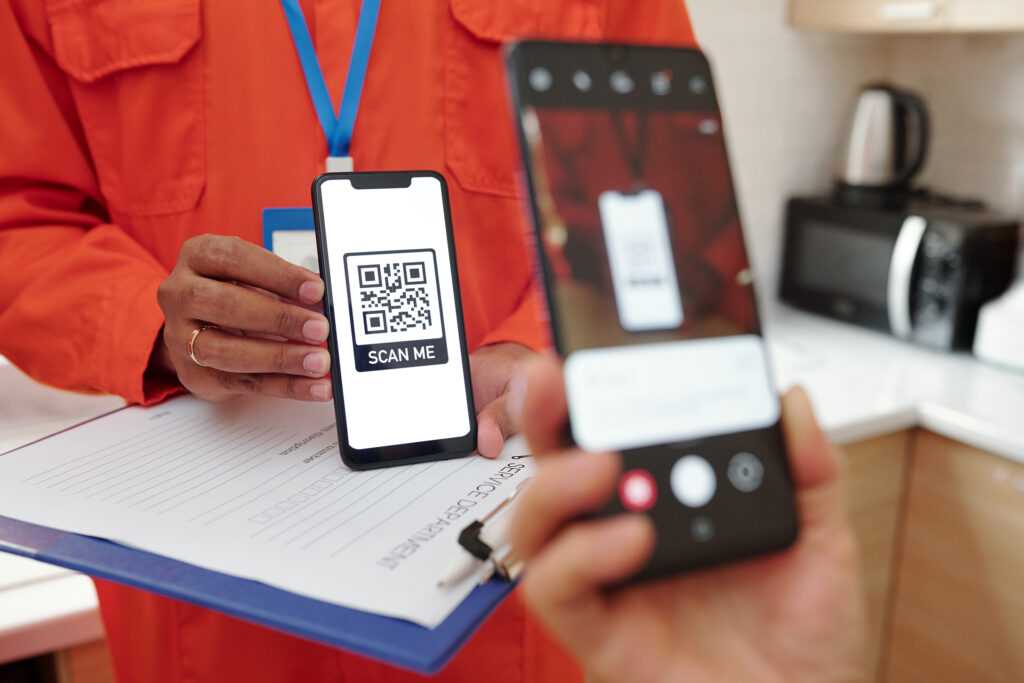
Imagine you’re a field technician installing a new internet router in a customer’s home. As you’re setting it up, the customer shows interest in upgrading to a better router on the spot. With a few taps on your tablet, you quickly generate a personalized invoice reflecting the upgrade cost. Instead of fumbling with cash or card readers, you simply present the QR code on your device screen. The customer scans the code with their smartphone, and just like that, the payment is processed. You install the upgrade then and there, leaving the customer satisfied with faster internet connection. The best part is the QR code ensured payment right away—you didn’t have to invoice them and wait for the payment via the monthly bill.

REPLACING PAPER INVOICES

Suppose you’re a home repair service worker who has just completed a job for a customer. Instead of the traditional route of handing over a paper invoice and waiting for a check, you offer a more secure and efficient payment option: a QR code. The customer scans the code with their smartphone, securely processing the payment electronically. This not only saves time and reduces the risk of errors associated with manual payments, but it also provides a better payment experience by using a modern payment solution.


ADD QR CODES TO YOUR PAYMENT CHANNELS

Incorporating QR codes as a payment channel offers businesses a practical and efficient way to interact with customers. With CSG Forte Engage, our intuitive payments solution, organizations can seamlessly integrate QR codes into their operations, providing customers with personalized and secure invoices for hassle-free transactions. By leveraging QR codes, businesses can streamline their payment processes and enhance customer satisfaction with a secure and convenient digital payment channel.

Take the next step in offering this convenient, secure method and contact us today.

Frequently Asked Questions About Payment Processing

The digital payments market is projected to reach $16.62 trillion by 2028. All businesses should be familiar with the basics of payment processing to remain agile in a competitive industry and ever-expanding landscape. We’ve answered some frequently asked questions (FAQ) about payments and their processing to help you get started.

Payment Methods

Understanding the terms and systems that go into payment processing gives you the edge to offer your customers frictionless, secure and simple ways to pay. Here are answers to some common questions about payment methods.

1. What Goes Into a Transaction Flow?

The transaction flow consists of various participants and components, including:

  • Customer: The customer is the individual or organization paying for services or products.
  • Merchant: The merchant is the service provider or business receiving payment from the customer.
  • Payment method: The payment method is how the customer pays—via check, credit or debit card, cryptocurrency, or electronic wallet.
  • POS system: The point-of-sale (POS) system is a digital platform or physical device used for the transaction. The POS system can be on an e-commerce website, app or terminal point at a store.
  • Payment gateway: The payment gateway safely captures and sends information from the POS system to the acquiring bank or payment processor. This gateway encrypts and secures the data during the transaction.
  • Payment processors: The payment processor is a third-party company managing the technicalities of the transaction. These technicalities include validating information, receiving authorization, and facilitating communication between the acquirer and issuer.
  • Acquirer: The acquiring bank, or the acquirer, is the financial institution where the merchant’s account is. The acquirer receives payments on behalf of the merchant, processes transactions for the merchant and settles the funds in the account.
  • Issuer: The issuer or issuing bank is the financial institution that authorizes or declines the transaction on behalf of the customer. Issuers consider customer account status, the validity of the transaction and available funds.
  • Card network: The card network includes organizations like Mastercard, Visa and American Express. These organizations provide the infrastructure, rules and standards for processing transactions.
  • ACH network: The Automated Clearing House (ACH) network is used to move money between bank accounts in the United States electronically. Nacha, previously called the National Automated Clearinghouse Association, runs the ACH network and ensures the payment system is safe and efficient. Transaction types include business-to-business, consumer and government transactions.
  • Payment security: Payment security consists of a range of technologies and standards to ensure transactions are secure from breaches and unauthorized access. Security involves encryption, tokenization and compliance with the regulations set by the Payment Card Industry Data Security Standard (PCI DSS) Council or the ACH network for bank-based payments.
  • Settlement: Settlement and reconciliation are the processes of transferring funds from the issuer to the acquirer and updating the transaction records to reflect the funds transferred.

2. What Is Payment Authorization?

Payment authorization is when the issuer verifies that the customer has the available funds and confirms that money can be released from the customer’s account. The issuing bank conducts thorough checks before authorizing transactions.

3. What Are Payment Settlement and Operations?

Payment settlement starts with customer payment initiation and ends once the funds are deducted from the customer’s account and paid to the merchant.

During settlement, the issuing bank verifies the transaction details and authorizes money to be debited from the customer’s account and credited to the merchant’s account. This settlement communication operates through the payment network.

4. What Are the Needs and Considerations of E-Check and Credit Card Payments?

E-checks and credit card payments have a few key differences:

  • E-check payments: The Automated Clearing House (ACH) merchant network processes e-check payments between participating financial institutions. E-checks are categorized as electronic funds transfers (EFTs). They work like ACH transfers with routing and account numbers, facilitating funds transfer between accounts. Electronic checks can save your business on payment processing costs—they’re typically more affordable than card transactions.
  • Credit card payments: Card authorization occurs when the merchant accepts a card payment and the payment processor reaches the card issuer. The issuing bank ensures the credit card is valid, verifies the transaction amount and available funds, and does security checks. The issuer will deliver a two-digit code approving or declining the transaction. Credit card transactions are convenient for customers, especially those who prefer to have a range of payment options.

5. What Are the Top Digital Wallets and How Do They Work?

The top digital wallets in North America include:

  • Apple Pay
  • Google Pay
  • PayPal
  • Venmo

Digital payment wallets use software that links your payment details from your bank account to the vendor you’re paying. Some apps offer open wallets that allow contactless online and in-store payments.

Electronic wallets make payments easy for customers—there’s no need to keep card details on hand to pay, and the information is stored in one central, protected location.

6. What Does Accepting On-Site Payments With Devices and POS Entail?

If you want to accept on-site payment with POS systems and devices, you need the associated hardware and software. You’ll also need a payment solutions provider.

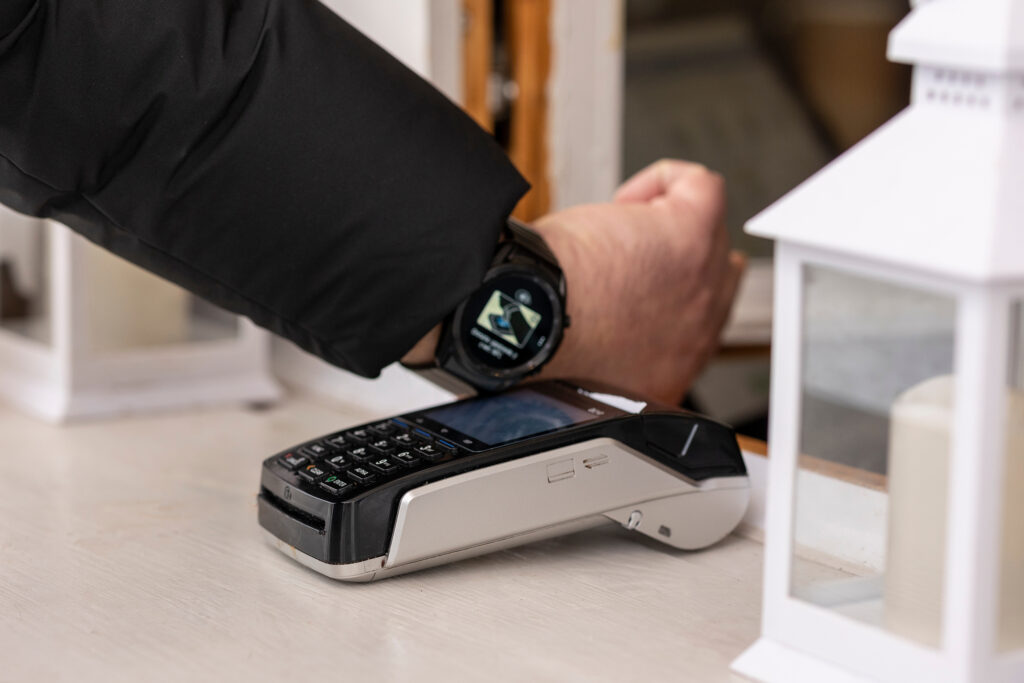
The necessary hardware includes a card acceptance machine, like a POS terminal. The hardware connects to software that processes transactions via the provider’s solution. POS terminals can accept several types of payments, including contactless payments, credit and debit cards. Customers can tap, swipe and insert cards depending on their preferences.

Processing Models

Processing models allow transactions to happen between the issuer and the acquirer. Here are the related questions answered.

1. What Is a Payment Gateway?

A payment gateway links all entities involved in a transaction and helps systems communicate with each other. Payment gateways establish secure connections to transmit data and process the transfer of funds from the customer’s account to the merchant’s to complete payment.

2. What Is an Enhanced Payment Gateway?

An enhanced payment gateway is a robust version of a standard payment gateway. This solution goes beyond processing payments, leveraging advanced fraud detection capabilities. Enhanced payment gateways may also feature subscription billing and customizable checkout options.

3. What Is an Acquired Payment Gateway?

An acquired payment gateway is a payment processing solution offered by a payment service provider. This solution lets you securely receive customer payments using online wallets, debit cards and credit cards. The gateway handles authorization, transaction processes and the transfer of secure funds into your account.

4. What Is a Payment Facilitator?

A payment facilitator (PayFac) simplifies the setup of payment processing for your business, allowing you to accept in-person and online payments. The PayFac has a master merchant account. Your business becomes a sub-merchant under the PayFac, eliminating the lengthy underwriting process. The PayFac enters a contract with the acquiring bank and manages the approval process on your behalf.

5. What Does It Mean to Be a Third-Party Sender?

A third-party sender (TPS) facilitates ACH transactions by having funds flow through its account. Third-party senders act as intermediaries, making payments on behalf of customers. This approach provides little protection in terms of risk management and adherence to safety standards. A TPS typically comes with higher transaction fees because of the higher involvement in the flow of funds.

6. What Is the Difference Between a Third-Party Sender and a Third-Party Service Provider?

A third-party sender directly receives and transmits funds through its bank account on behalf of a company. A third-party service provider does not hold funds and transfers funds to ACH network users.

When third-party senders pay on behalf of a client, the risk involved tends to raise the price. A TPS solution can also cause customer onboarding friction.

Leveraging a third-party service provider (TPSP) offers greater security, as these entities strictly adhere to regulations and don’t automatically move money. You’ll also benefit from faster processing times, better customer onboarding, flexible transaction limits and lower transaction fees.

Pricing

Payment processing pricing is also an essential consideration for your business.

1. What Is an Interchange Fee?

Interchange fees make up the majority of payment processing fees. You pay interchange fees to financial institutions that manage the customer’s card payments. These are standard charges that come with the convenience of using a specific payment method.

2. What Is Pass-Through Pricing?

Pass-through pricing includes interchange, assessment and payment processor fees. These fees are typically itemized or combined monthly on a statement for a merchant to pay. Pricing structures differ, so it’s important that your business partners with a competitively priced payment solutions provider.

3. What Is a Flat- or Fixed-Rate Model?

A flat- or fixed-rate model charges your business the same processing fee percentage regardless of the card used. The flat-rate percentage is typically based on the cards with the highest interchange rates.

4. What Is a Convenience Fee?

A convenience fee is an additional credit card or online payment charge. It’s sometimes charged by a payment processor when a customer does not pay by cash, check or ACH. It can be applied as a split charge or split fund.

5. What Is a Split Charge?

With a split charge, the payer sees two entries on their statement—one for principal and another for convenience.

6. What Is a Split Fund?

Merchants can set up predefined splits to go to different bank accounts. Split funds come in handy when your business charges convenience fees that need to go to a separate account from the transaction amount. Debit and credit funding bank accounts are usually set up this way for merchants.

CSG Forte offers split funds and handles the setup to ensure hassle-free allocation.

Integrations

Integrated payments connect your POS system to a payment processor, offering streamlined transactions.

How Does Integration Impact the Payment Experience?

Integrated solutions enable you to offer a better payment experience. Customers can pay using various methods without the need for different payment terminals or manual processes, making transactions frictionless.

With CSG Forte, integrated payments are an all-in-one solution that benefits your business and customers.

 Payment Security

No payment processing FAQ would be complete without info about payment security.

1. What Is Tokenization?

Payment tokenization is a security measure that uses unique tokens instead of transmitting sensitive payment data during transactions. These tokens protect information like banking details, primary account numbers (PANs) and credit card numbers.

2. What Is the Payment Card Industry Data Security Standard?

PCI DSS is a set of standards requiring all businesses that handle credit card or payment information to maintain a secure environment. These compliance standards apply to all organizations, no matter the size of your business or the amount of transactions it handles.

3. What Are the Top Considerations for Nacha Compliance?

Nacha offers rules and requirements for any organization leveraging ACH payments. Here’s a brief overview of what Nacha expects your business to do:

  • Secure payment transmission and storage of sensitive information.
  • Store hard copies of documents with customer information safely.
  • Validate customer routing numbers.
  • Guard against possible fraud.
  • Verify customer identities.
  • Outline and enforce an official security policy.

4. What Is End-to-End Encryption?

End-to-end encryption (E2EE) is a way to safeguard your customers’ data during transactions. This encryption prevents data breaches and unauthorized access to sensitive information like credit card or bank account details. Sensitive information is encrypted and securely transmitted from one point to the next, allowing your customers to pay you safely.

The payment gateway performs the encryption when the customer initiates the payment, and it decrypts the information when it reaches the acquirer.

5. What Is Point-to-Point Encryption?

Point-to-point encryption (P2PE) is an encryption method established by the PCI DSS Council. It offers excellent protection, using an algorithm to encrypt card information when the customer initiates payment. The unreadable code is transmitted to the payment processor with a decryption key. The decryption happens virtually, so your business never comes in contact with customer payment information.

While P2PE and E2EE are similar, the PCI DSS Council only accepts point-to-point encryption.

Ready to Streamline Your Payment Solutions?

CSG Forte will help you scale your business rapidly and make payments frictionless for you and your customers. Each year, we help process over $84 billion of payment transactions.

Contact us online to simplify and secure your payments.

ACH Fraud

The Automated Clearing House (ACH) is a network that clears funds moving from one bank account to another. When a payer transfers money via debit, credit card or EFT, the funds await authorization. Once clear, the ACH system moves the funds into the payee’s account.

The National Automated Clearinghouse Association (Nacha) oversees this network in the United States. Nacha employs rigorous security measures to guard users’ accounts. Outside its security nexus, bad actors who gain access to pertinent information can commit ACH fraud. This type of fraud is relatively common—a criminal only needs access to a few details to open the door to several opportunities for theft. Preventing access at the start is better than remedying a security breach.

What Is ACH Fraud?

ACH fraud occurs when criminals use account and routing numbers to impersonate victims and manipulate the movement of funds. Criminals can obtain routing numbers at the bottom of their targets’ checks. They might use this information to impersonate someone and steal funds through various methods:

  • Internal fraud: When an employee of a company uses legitimate credentials to make unauthorized ACH withdrawals and payments, the fraud is considered internal.
  • ACH kiting: Kiting occurs when fraudsters move funds from one company account or financial institution to another.
  • Fraudulent authorized push payments (APPs): When a customer attempts to pay you, criminals trick them into making ACH transactions prompted by scams, and the funds never reach your account.
  • Unauthorized access to personal accounts: ACH transactions render you and your clients vulnerable to unauthorized persons having access to sensitive accounts.
  • Unauthorized ACH withdrawals: Merchants and clients risk having funds withdrawn from bank accounts without authorization.

Within the ACH network, there are several steps between a payer sending funds to an account and the payee receiving the funds. This process is not impenetrable to criminals, who are using more sophisticated means of defrauding unsuspecting users. Traditional ACH systems lack proper security mechanisms, leaving you and your end users vulnerable.

ACH Fraud and Concerns

Concern is mounting over the rate at which ACH fraud is increasing, highlighting the need for more vigorous security methods. Criminals only need two data sets to successfully steal money through the ACH network—a bank account number and a bank routing number. Businesses and enterprises accepting payments need to address increasing ACH fraud to protect themselves and end users.

ACH fraud can occur from external means or inside a company. Employees don’t need to know complicated data sets or complex codes to hack a business or another person. Staff are also at risk of social engineering and phishing attacks.

How ACH Fraud Can Affect Your Business

A U.S. District Court recently found a credit union liable for not acting on several suspicious ACH transactions. If you’re a business accepting payments or overseeing financial transactions, it’s critical to be proactive in preventing ACH fraud. Nacha and the Federal Reserve Regulation E have policies that state the consumer is not responsible for ACH fraud unless they fail to report an incident within 60 days.

Financial institutions can be held liable, with the bank returning the funds to the consumer and claiming them back from the original enterprise. Successful fraud protection can keep your end users safe and protect you from the costs of fraudulent ACH activity.

CSG Forte’s Approach to ACH Fraud Prevention

CSG Forte has extensive experience in ACH fraud prevention and detection, and our robust payment platform provides reliable, secure solutions. For your convenience and safety, we adapt to the evolving digital economy to provide a unified payment solution with built-in fraud-prevention protocols using the latest technology.

Furthering your peace of mind that your funds are handled safely, we’ve partnered with Nacha, the body overseeing all ACH transactions. You’ll also benefit from:

  • Advanced security protocols: Your data stays protected with our advanced security solutions, such as Forte.js and compliance with major card brands.
  • Real-time alerts: You can remain in control of your funds by monitoring transactions in real time and receiving alerts for every activity connected to your funds.
  • Comprehensive evaluation: We thoroughly evaluate merchant accounts to prevent delays down the line and help you accept payments seamlessly. Evaluation helps ensure your payment system will have adequate ACH fraud protection, mitigating loss in the long run.

We bring you reliable, safe payment processing solutions. Our approach to fraud prevention is comprehensive, as we’ve partnered with several leading software providers to prevent money laundering and several types of sophisticated financial crimes.

Key Features of Our ACH Fraud Prevention

To secure every payment and keep your data safe, CSG Forte develops every software platform and application tool with security as the cornerstone. The key features of our ACH fraud prevention include:

  • Multifactor authentication: For your safety and privacy, we protect your data with layers of security.
  • Software to detect behavioral anomalies: You can have peace of mind knowing our behavioral analytics software detects discrepancies from your usual activity and alerts you in case of an anomaly.
  • End-to-end encryption: We use end-to-end encryption technology to safeguard all data and prevent your information from leaking to a third party.
  • Tokenization: We limit the exposure of your sensitive information through tokenization, ensuring your data remains hidden in the system throughout the payment process.

We are committed to providing you with rigorous, up-to-date security systems for your enterprise, as evidenced by our compliance with several security programs. You can rest assured your funds are protected during every transaction.

Protect Against ACH Fraud With CSG Forte

ACH is a vital payment method to offer your customers. However, its attainability makes it vulnerable to breaches. Protecting your funds and your customers takes a proactive stance. Take action by integrating an advanced, robust platform from CSG Forte.

To take the next steps with our secure platform, fill out the online form and a payment expert will be in touch. You can also contact our team if you have any questions before you get started.

ACH vs. EFT

If you have a global presence, electronic payments are the most secure way of ensuring you receive payment for your products. An electronic funds transfer (EFT) is a blanket term for all funds transferred electronically between a bank or financial institution and an individual or merchant. Automated Clearing House (ACH) payments fall under this blanket and are authorized by a collective network known as the National Automated Clearinghouse Association (Nacha). Nacha authorizes electronic funds to be processed between two parties in an ACH payment.

CSG Forte’s unified platform provides your business with the tools to scale your payments and accept electronic ACH payments. You’ll receive your money safely and swiftly thanks to our seamless technology and robust security measures. As a Nacha preferred partner, we ensure your sensitive data remains secure while our system processes the funds for you.

The Difference Between ACH and EFT

ACH is just one type of EFT payment. When you initiate an ACH transaction, the money is deposited into the recipient’s account and channels through a network that authorizes the funds. A direct deposit is a sum of money paid directly into a bank account through digital channels independent of bank staff. In this sense, a direct deposit is also a type of EFT transaction. Other types of EFT payments can include wire transfers, mobile money applications and checks.

There are key differences between ACH and other EFT transactions to be aware of:

  • ACH transfers are settled and cleared in batches and not individually, such as with EFTs.
  • ACH transfers and EFTs may have varying fees and costs.
  • Traditional ACH transfers usually take a few business days to authorize, whereas some EFTs are cleared immediately.

How Is an EFT Payment Processed?

The manner of processing depends on the type of EFT transaction. Wire transfers channel through banks and member-based digital networks. Direct deposit payments move between two bank accounts via digital channels. ACH transfers are authorized through the Nacha network, which offers extra protection and a safer way for businesses to transact.

The Benefits of Accepting ACH Payments

Any bank transfer or check deposit comes with fees. Because ACH makes payments easy and safe, more people use it, lowering costs overall. Depositing checks can be a manual and time-consuming process. Additionally, you’ll have to wait a few business days before the funds reflect in your account. Some ACH transactions save you time with same-day clearance without the need to visit the bank.

One of the most attractive features of ACH payments is security. Your funds are protected and authorized through a reliable third party. Sensitive information, such as bank account and routing numbers, is encrypted and hidden as an added security measure.

CSG Forte’s ACH Payment Solutions

We offer your business a comprehensive and safe way to accept ACH payments with added security measures through our payment platform. Our platform takes care of the exchange, keeping your money and information secure. Take advantage of:

  • Real-time reporting: Monitor your transactions and get real-time alerts connected to your account and funds.
  • Seamless integration: You can easily integrate our solutions with your existing payment platform.
  • Tokenization and end-to-end encryption: Your account number stays hidden, and your information cannot be shared.

Key Features of CSG Forte’s ACH Payment Solutions

CSG Forte understands you need a simple, effective payment processing solution that protects you and your end users. Experience safe and seamless ACH payments through our:

  • User-friendly interface: To bring you a simplified solution, our ACH interface is easy to use.
  • Multilayered security: We understand that safety and privacy are concerns, which is why our platform uses layers of security to protect your data.
  • Customization options: We keep your growth in mind. Our platform is customizable and scalable to fit your business requirements, whether you’re a large corporation or an independent software vendor (ISV).

Case Study: Rentec Direct

Rentec Direct is an all-in-one property solution provider. The business sought new payment processing methods to reduce lag time and late payers. By adopting ACH along with other solutions from CSG Forte, Rentec Direct was able to save time and money with seamless integration and secure payment acceptance.

Landlords and property owners saw a reduction in late rent payments from 22% to only 1%. Since using CSG Forte’s solutions, the company enjoyed an average of 98% revenue growth over four years.

Getting Started With ACH Payments Through CSG Forte

Getting started with our ACH payments solution is easy. Our software is language- and software-independent, so you can integrate it as a complement to your existing systems or use it as a stand-alone platform.

We’ll support you during the implementation phase with:

  • Training: You will receive training to manage your new platform with ease.
  • Resources: We offer onboarding resources for you to utilize and capitalize on your software.
  • Ongoing customer service: You have a partner when you do business with us. Our dedicated customer service team will answer any questions or concerns you may have.

Explore ACH Payment Solutions With CSG Forte

Millions of businesses and employers are already using ACH as their preferred payment method thanks to its safety features. CSG Forte understands your need for secure payment alternatives to scale your business and boost revenue. Keeping your data safe is our priority. We facilitate a safe, affordable way for you to accept payments.

Get started today and discover the benefits of secure ACH payments. You can also reach out to us online through our contact form. Feel free to call us at 866-290-5400 if you have any questions.

P2PE vs. E2EE: What’s the Best Payment Security Option for Governments?

If end-to-end encryption (E2EE) and point-to-point encryption (P2PE) sound like they could be the same thing, you’re not wrong. Technically speaking, P2PE is a specific type of E2EE, and the objective in both uses is to secure cardholder data from the time it’s captured until it reaches its intended destination.

However, only one of these methods offers significant time savings and cost benefits to the government agencies that use them. Read on to understand the differences between E2EE and P2PE and why choosing P2PE could be in your department’s best interest.


What Is P2PE?

As the ongoing threat of data breaches continues to menace government agencies of all sizes, securing cardholder data remains a top priority. In recent years, P2PE has become the gold standard for credit card payment security compliance.

Here’s why: Payment card industry (PCI)-validated P2PE is a set of standards defined by the PCI Security Standards Council (SSC) that outlines a comprehensive set of best practices spanning the device supply chain, encryption key loading, configuration, encryption and application security.

The P2PE process creates a secure connection between devices, or components within devices, which prevents possible sensitive data from being exposed at any point while moving across a network. It effectively removes cardholder data from an agency’s environment, providing better protection for the cardholder.


How Does P2PE Work?

P2PE encrypts cardholder data immediately upon receiving a card payment. It sends this encrypted code directly from the payment terminal to the payment processing system, where the information gets decrypted using a secure key.

Since the decryption takes place entirely in the payment processor, the government entity never sees any of the cardholder’s information. If hackers manage to intercept the data while it’s in transit, they will not be able to read the data because only the processor possesses the key—there’s no chance someone can steal the key from the government agency or any other transactional party.


PCI P2PE Compliance Requirements

P2PE reduces the likelihood of PCI compliance breaches by directly connecting the payment terminal to the processing system—and correspondingly drops the number of self-assessment questionnaire questions from over 300 to around 30. This function means your department can raise the bar on security without also increasing the compliance audit burden.

Some other key compliance requirements include:

  • The data must be encrypted at the payment terminal.
  • The payment terminal may only use P2PE-approved applications.
  • The merchant must conduct annual inventory checks on payment terminals.
  • The merchant must install cameras with a clear view of the terminal.

Ultimately, these requirements are fairly easy for most agencies to manage, leaving more time and scarce resources to spend on the purpose and passion at the forefront of your day-to-day dealings rather than the processes behind each transaction.


The Benefits of P2PE With CSG Forte Protect

CSG Forte Protect is a PCI-validated P2PE solution securing the V400C terminal for in-person payments. CSG Forte Protect helps governments:

  • Remove liability issues: Forte Protect merges processes, applications and payment devices to securely encrypt and protect data during transit from the POI terminal/device or POS system
  • Protect cardholder data: Our solution has three parts—validated hardware, validated software and validated solution providers to cover payment terminals, terminal application, deployment, key management and decryption environments.
  • Save time and money: With a minimal per-transaction cost, Forte Protect saves your agency PCI-related costs by reducing PCI scope. This is because the number of questions from the self-assessment questionnaire (SAQ) drops from SAQ D (329 questions) to SAQ P2P3 (33 questions).
  • Fully integrate existing payment channels: Supported card input methods include tap, dip, swipe, keyed, Apple Pay, Samsung Pay and Google Pay. Your constituents’ payment experience will be seamless without you lifting a finger!

We put data security at the core of all our payment solutions, so you can rely on Forte Protect to keep constituent data safe through every payment—every time. In addition to meeting PCI standards, we’re certified for compliance with ISO 27001:2013, SSAE SOC 1 and the Health Insurance Portability and Accountability Act (HIPAA). Whatever your agency needs, we can help you protect constituents from data breaches.


What Is E2EE?

Many government transactions rely on E2EE, a process that involves an indirect link between the payment terminal and processing network. During this operation, the processor or a third party is expected to encrypt cardholder data (CHD) during transit.

Unfortunately, the indirect link means card present transactions—where the user swipes, dips or taps their card—are a constant area of concern. Preventing fraud at the terminal isn’t just a matter of checking who is presenting the card. You also must ensure the payment terminals themselves are secure. By intercepting POS devices or using insiders, malware loaded to a device can scrape and transfer cardholder data available in its memory.

That’s why rather than finding new ways to protect cardholder data, businesses are looking for ways to eliminate cardholder data from their environments.


E2EE and PCI Compliance

Some agencies using E2EE claim that using doing so makes adhering to PCI guidelines easier because it encrypts data throughout the entire process, but this claim isn’t entirely the case.

While this method is compliant with PCI guidance, E2EE requires intensive documentation and additional ongoing costs associated with PCI compliance. Agencies often hold the encryption keys, so merchants relying on E2EE will typically need to complete an annual PCI DSS SAQ with over 300 questions.

Even though local and regional governments are used to wearing many hats, assuming responsibility for PCI compliance may be more than many can handle. If government agencies choose to have someone else manage PCI compliance on their behalf, like processors or outside consultants, they’ll also incur the added expense of outside help.


What’s the Difference Between P2PE and E2EE?

While they are similar in nature, some of the most significant differences between P2PE and E2EE include:

  • Security rules: P2PE and E2EE require different security checks on and around the payment terminal. For example, P2PE requires merchants to perform annual terminal inventory checks to ensure everything works properly.
  • Control: Because the scope for PCI compliance is much smaller with P2PE, merchants have greater control over their ability to adhere to the standard. E2EE, on the other hand, contains more endpoints, making compliance more complicated.
  • Liability: P2PE providers take complete liability for data breaches because they hold the keys. With E2EE, though, the merchant has control over decryption keys and can be held liable for stolen cardholder data.

Ultimately, these differences mean the best choice for most government agencies that are planning to accept credit card payments is P2PE. It makes compliance more manageable and keeps cardholder data safer than E2EE—and it’s entirely possible with a reliable provider like CSG Forte. If you want to improve your payment processing technology, consider using our solutions to secure your card transactions.


Choose P2PE Payment Solutions from CSG Forte

The numerous controls and security implemented across this entire value chain make P2PE an extremely secure encryption method—but also a high bar for providers to clear. Only a select few offer PCI-validated P2PE today, and we’re proud to be one of those few.

At CSG Forte, we know securing a stable and safe government solution can relieve the security and compliance pressures from you and your agency employees. For that reason, CSG Forte Protect was created with you in mind to give you peace of mind.

We know you have more pressing issues to worry about than transactions and payments operations. That’s why our team at CSG Forte created safe and secure payment processing solutions. Learn more about CSG Forte’s secure in-person payments processing solutions, or contact us to get started.

Optimize the Payment Journey for Your Customers

Customer payment experiences have evolved in recent years. Digital payments are leading the pack, providing multiple ways for users to transact with businesses. By optimizing the payment journey for your customers, you can enhance their experiences and reduce late payments.

What Is the Payment Journey?

The payment journey is the path customers take when buying a product or service from your organization. The journey extends from the consumer engaging with your company about what they want to the steps they take to pay for the solutions you deliver. You want billing, invoicing, and transactions to be hassle-free from start to finish, removing barriers and making payments seamless and personalized for your customers and merchants.

The goal of a streamlined payment journey is to replace any friction in the process with solutions that provide convenience and choice.

How to Improve the Payment Journey

Enhancing the payment journey leads to better user experiences and increased customer satisfaction. A happy customer is likely to return and advocate for your brand. Here are four ways you can improve the payment journey.

1. Accept Multiple Forms of Payment

You can optimize the payment journey and meet customers where they are by allowing multiple payment methods, including credit cards, digital wallets, or bank transfers. The more options you provide, the fewer reasons customers will have to postpone payment.

2. Provide Recurring Billing Options

Subscription or recurring billing provides:

  • Consistent revenue: Recurring billing gives your business a predictable revenue stream. Regular payments increase business stability and cash flow. Using systems like CSG Forte Account Updater automatically updates account info so you rarely miss payments and can focus on steady revenue recognition.
  • Convenience for customers: Subscription services streamline payment for customers. Your customers won’t have to complete payments manually, saving them time and effort. Convenience enhances the customer experience and increases brand loyalty.
  • Efficient operations: Recurring billing reduces your team’s administrative workload. Instead of manual interventions, you get automated solutions that optimize your processes and enable you to focus on more impactful tasks.

Securely gathering and storing sensitive information is key to benefit from recurring billing. Using an encrypted platform will help you manage data effectively and make cancellation easy for customers.

3. Offer Multiple Channels to Pay

To improve your payment journey, you must allow customers to select their preferred channels to pay. The seamless transition between channels makes for frictionless payments. It also lets customers choose how they interact with your business. A multichannel payment platform will allow your customers and merchants to use email, phone, in-person, text, or live agent channels to pay bills and complete transactions.

4. Let Customers Buy Now and Pay Later

Merchants are increasingly adopting buy-now-pay-later (BNPL) models. Offering the option to pay in installments may:

  • Improve conversion rates: BNPL lets your customers bypass full upfront costs. Smaller installment payments lower the financial barrier to transactions, leaving customers more likely to make impulse purchases that raise your conversion rates.
  • Attract new customers: The ability to pay in installments can make purchasing an easier choice for new customers who might be put off by prices initially. BNPL also offers an alternative method to credit cards, which may be a plus for some consumers.
  • Increase customer loyalty and repeat purchases: Customers with a positive experience of your BNPL services are more likely to make repeat purchases and advocate for your business, driving word-of-mouth referrals.
  • Reduce cart abandonment: Customers abandoning their carts is a serious problem e-commerce businesses face. BNPL alleviates cart abandonment due to financial barriers, giving shoppers more time to complete their purchases.

The Benefits of Frictionless Payments

An integrated payment system is an investment in your business. Modern customers expect seamless payment experiences, and they might turn to a competitor if they find paying bills or completing transactions out of sync with their preferences.

A seamless payment journey and system has several benefits, including:

  • Saving your business money and time in the long run
  • Increasing customer loyalty and confidence
  • Reducing risks associated with payments
  • Maximizing the probability of repeat purchases and on-time payments
  • Offering flexibility in terms of payment channels
  • Enhancing your payment security features
  • Giving your business a competitive edge in the market

How CSG Forte Will Help You

CSG Forte has decades of experience helping businesses like yours optimize the payment journey. We know how to do payments right, and we’ll come alongside your business to streamline the process for your customers.

Take advantage of multichannel payments, customized journeys and secure solutions to help your business succeed.

Multichannel Payments

CSG Forte Engage enables your customers to choose their preferred channels during the payment journey. Customers can pay by text, phone, email or through a live agent and change their method seamlessly as needed.

Customized Payment Journeys

Forte Engage assists your business in deploying branded customer payment journeys for recurring, future-dated and one-time payments.

You can easily send customers invoices with confirmations, late notifications and payment-due prompts via their preferred channels. These highly personalized interactions can help reduce outstanding amounts that are past due.

Secure Payments

Through the call center payment processing feature of the Forte Engage solution, live agents can rapidly generate personalized invoices and send them to customers online.

The agents leverage innovative NanoSite technology to complete transactions without your customers needing to provide their credit card or bank account info. These secure NanoSites mean you won’t have to worry about data leaking. You’ll also benefit from a solution that offers prompt payments—a win-win.

Enhance Your Payment Customer Experience With CSG Forte

At CSG Forte, we partner with businesses to help them scale while offering superior customer experiences. We use an intuitive, unified payment platform that adapts to your evolving needs. Our payment solutions will reduce operational costs, simplify processes and help your business build a solid reputation for secure transactions.

With our decades of experience, award-winning technology and vast network of partners, you can count on us to streamline your payment journeys and enhance your interactions with customers.

Contact our team for frictionless payments, optimized journeys and first-rate customer experiences.

A Mid-Year Outlook of the Payments Landscape

We’re halfway through 2023 and it’s amazing how much has changed these past 6 months, both in terms of the business landscape and the current economic environment.

Before heading into the second half of the year, I think it’s important to pause and look at how the payments industry is continuing to transform. Here are some of the emerging payments trends that businesses should keep tabs on to set themselves up for success.


1. Personalizing the Payments Experience Drives Customer Loyalty

Companies need to offer personalized experiences to stay relevant, especially when you consider that 76% of consumers get frustrated by businesses that don’t offer personalized experiences.

Payments may not be top of mind when you think of how to personalize a user experience but it’s an integral part of the customer journey.  According to a 2022 survey, 91% of consumers indicated a satisfying checkout experience influences whether they will buy from that merchant again.

How do you personalize the payment experience? By letting customers pay when and how they want to pay. Offering convenient, preferred digital payments channels is essential, and is becoming more so. In CSG’s State of the Customer Experience 2023 Report, we found that digital communications sent through CSG increased 15.6% year-over-year in 2022.

Offering preferred digital channels may mean leveraging text-to-pay technology, which lets customers simply respond with a text message to make a payment, or letting customers schedule an automated phone call to complete a purchase. It could also mean printing QR codes on billing statements to make going online to pay that much easier. Not only is this a better customer experience, but your company is likely to see lower payment abandonment.

By offering a personalized payments experience, businesses are also building brand loyalty with their customers. Oftentimes we think of loyalty programs as discounts or special perks, but loyalty extends throughout the entire buying process—including completing a payment. By making payments frictionless, personalized, and convenient, companies can increase customer lifetime value and reduce payment abandonment.


2. Embedded Payments Remain Paramount

The best payment experience is the one you don’t even think about. It’s so seamless that you don’t notice it at all. This is where embedded payments come into play and it’s essential that organizations offer the payment options consumers are expecting.

Your checkout page can be a balancing act—you’re trying to offer consumers the payment options they want but you don’t want to overwhelm them with choices.

When determining which payment choices to offer,  lead with how people want to pay and what is easiest for them. This includes payment methods like Apple Pay, Google Pay, and PayPal. To make payments even more seamless, you could consider offering social media sign-on, which was identified as a top checkout feature that enhances customer satisfaction.


——————————————————————————————————

RELATED WHITE PAPER: 3 Steps to Ensure Payments Security

——————————————————————————————————


3. Security, Security, Security

We’ve said it before and we’ll say it again. All parties in the payments process are concerned about security. As payment methods evolve, so do cyber criminals and it’s critical that organizations work with a payments provider that offers the latest in payments security.

At CSG Forte, we recommend following sound security best practices and leveraging solutions that reduce PCI scope. Best practices include end-to-end (E2E) Encryption, tokenization, and two-factor authentication.

Using secure solutions can also greatly reduce risk. For in-person payments, Point-to-Point Encryption (P2PE) is the gold standard in PCI compliance. The trailblazing P2PE process creates a secure connection between devices, or components within devices, preventing possible sensitive data from being exposed at any point while it moves across a network. P2PE reduces the likelihood of PCI compliance breaches—and correspondingly drops the number of self-assessment questionnaire questions from over 300 to around 30. This means you can raise the bar on security but dramatically lower the compliance audit burden.

Another way for an organization to reduce fraud risk is to leverage an authentication solution. When using an authentication solution, you can easily confirm account ownership information (including full name and business name) to secure your ACH transactions. This helps ensure payment accuracy and reduces fraud potential.

A good payments processor will also have solutions that reduce your PCI scope. For example, call centers can greatly reduce their PCI scope by texting or emailing a link to a customer to complete payment, as opposed to having a customer service representative manually take sensitive payment information over the phone.

As the payments landscape and consumer preferences continue to evolve, it’s important that your business works with a payments solution provider that offers the latest in secure payments technology. At CSG Forte, we are dedicated to providing solutions that help your business prepare for the future. Contact us to learn how we can be a valuable partner to your business today.