
Frequently Asked Questions About Payment Processing
The digital payments market is projected to reach $16.62 trillion by 2028. All businesses should be familiar with the basics of payment processing to remain agile in a competitive industry and ever-expanding landscape. We’ve answered some frequently asked questions (FAQ) about payments and their processing to help you get started.
Payment Methods
Understanding the terms and systems that go into payment processing gives you the edge to offer your customers frictionless, secure and simple ways to pay. Here are answers to some common questions about payment methods.
1. What Goes Into a Transaction Flow?
The transaction flow consists of various participants and components, including:
- Customer: The customer is the individual or organization paying for services or products.
- Merchant: The merchant is the service provider or business receiving payment from the customer.
- Payment method: The payment method is how the customer pays—via check, credit or debit card, cryptocurrency, or electronic wallet.
- POS system: The point-of-sale (POS) system is a digital platform or physical device used for the transaction. The POS system can be on an e-commerce website, app or terminal point at a store.
- Payment gateway: The payment gateway safely captures and sends information from the POS system to the acquiring bank or payment processor. This gateway encrypts and secures the data during the transaction.
- Payment processors: The payment processor is a third-party company managing the technicalities of the transaction. These technicalities include validating information, receiving authorization, and facilitating communication between the acquirer and issuer.
- Acquirer: The acquiring bank, or the acquirer, is the financial institution where the merchant’s account is. The acquirer receives payments on behalf of the merchant, processes transactions for the merchant and settles the funds in the account.
- Issuer: The issuer or issuing bank is the financial institution that authorizes or declines the transaction on behalf of the customer. Issuers consider customer account status, the validity of the transaction and available funds.
- Card network: The card network includes organizations like Mastercard, Visa and American Express. These organizations provide the infrastructure, rules and standards for processing transactions.
- ACH network: The Automated Clearing House (ACH) network is used to move money between bank accounts in the United States electronically. Nacha, previously called the National Automated Clearinghouse Association, runs the ACH network and ensures the payment system is safe and efficient. Transaction types include business-to-business, consumer and government transactions.
- Payment security: Payment security consists of a range of technologies and standards to ensure transactions are secure from breaches and unauthorized access. Security involves encryption, tokenization and compliance with the regulations set by the Payment Card Industry Data Security Standard (PCI DSS) Council or the ACH network for bank-based payments.
- Settlement: Settlement and reconciliation are the processes of transferring funds from the issuer to the acquirer and updating the transaction records to reflect the funds transferred.
2. What Is Payment Authorization?
Payment authorization is when the issuer verifies that the customer has the available funds and confirms that money can be released from the customer’s account. The issuing bank conducts thorough checks before authorizing transactions.
3. What Are Payment Settlement and Operations?
Payment settlement starts with customer payment initiation and ends once the funds are deducted from the customer’s account and paid to the merchant.
During settlement, the issuing bank verifies the transaction details and authorizes money to be debited from the customer’s account and credited to the merchant’s account. This settlement communication operates through the payment network.
4. What Are the Needs and Considerations of E-Check and Credit Card Payments?
E-checks and credit card payments have a few key differences:
- E-check payments: The Automated Clearing House (ACH) merchant network processes e-check payments between participating financial institutions. E-checks are categorized as electronic funds transfers (EFTs). They work like ACH transfers with routing and account numbers, facilitating funds transfer between accounts. Electronic checks can save your business on payment processing costs—they’re typically more affordable than card transactions.
- Credit card payments: Card authorization occurs when the merchant accepts a card payment and the payment processor reaches the card issuer. The issuing bank ensures the credit card is valid, verifies the transaction amount and available funds, and does security checks. The issuer will deliver a two-digit code approving or declining the transaction. Credit card transactions are convenient for customers, especially those who prefer to have a range of payment options.
5. What Are the Top Digital Wallets and How Do They Work?
The top digital wallets in North America include:
- Apple Pay
- Google Pay
- PayPal
- Venmo
Digital payment wallets use software that links your payment details from your bank account to the vendor you’re paying. Some apps offer open wallets that allow contactless online and in-store payments.
Electronic wallets make payments easy for customers—there’s no need to keep card details on hand to pay, and the information is stored in one central, protected location.
6. What Does Accepting On-Site Payments With Devices and POS Entail?
If you want to accept on-site payment with POS systems and devices, you need the associated hardware and software. You’ll also need a payment solutions provider.
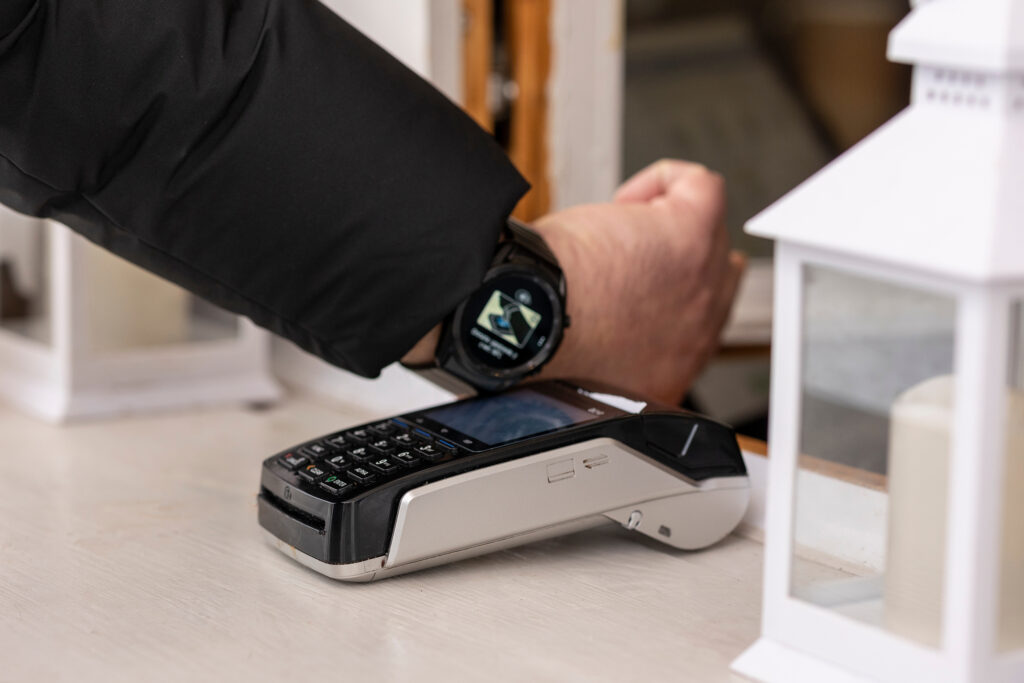
The necessary hardware includes a card acceptance machine, like a POS terminal. The hardware connects to software that processes transactions via the provider’s solution. POS terminals can accept several types of payments, including contactless payments, credit and debit cards. Customers can tap, swipe and insert cards depending on their preferences.
Processing Models
Processing models allow transactions to happen between the issuer and the acquirer. Here are the related questions answered.
1. What Is a Payment Gateway?
A payment gateway links all entities involved in a transaction and helps systems communicate with each other. Payment gateways establish secure connections to transmit data and process the transfer of funds from the customer’s account to the merchant’s to complete payment.
2. What Is an Enhanced Payment Gateway?
An enhanced payment gateway is a robust version of a standard payment gateway. This solution goes beyond processing payments, leveraging advanced fraud detection capabilities. Enhanced payment gateways may also feature subscription billing and customizable checkout options.
3. What Is an Acquired Payment Gateway?
An acquired payment gateway is a payment processing solution offered by a payment service provider. This solution lets you securely receive customer payments using online wallets, debit cards and credit cards. The gateway handles authorization, transaction processes and the transfer of secure funds into your account.
4. What Is a Payment Facilitator?
A payment facilitator (PayFac) simplifies the setup of payment processing for your business, allowing you to accept in-person and online payments. The PayFac has a master merchant account. Your business becomes a sub-merchant under the PayFac, eliminating the lengthy underwriting process. The PayFac enters a contract with the acquiring bank and manages the approval process on your behalf.
5. What Does It Mean to Be a Third-Party Sender?
A third-party sender (TPS) facilitates ACH transactions by having funds flow through its account. Third-party senders act as intermediaries, making payments on behalf of customers. This approach provides little protection in terms of risk management and adherence to safety standards. A TPS typically comes with higher transaction fees because of the higher involvement in the flow of funds.
6. What Is the Difference Between a Third-Party Sender and a Third-Party Service Provider?
A third-party sender directly receives and transmits funds through its bank account on behalf of a company. A third-party service provider does not hold funds and transfers funds to ACH network users.
When third-party senders pay on behalf of a client, the risk involved tends to raise the price. A TPS solution can also cause customer onboarding friction.
Leveraging a third-party service provider (TPSP) offers greater security, as these entities strictly adhere to regulations and don’t automatically move money. You’ll also benefit from faster processing times, better customer onboarding, flexible transaction limits and lower transaction fees.
Pricing
Payment processing pricing is also an essential consideration for your business.
1. What Is an Interchange Fee?
Interchange fees make up the majority of payment processing fees. You pay interchange fees to financial institutions that manage the customer’s card payments. These are standard charges that come with the convenience of using a specific payment method.
2. What Is Pass-Through Pricing?
Pass-through pricing includes interchange, assessment and payment processor fees. These fees are typically itemized or combined monthly on a statement for a merchant to pay. Pricing structures differ, so it’s important that your business partners with a competitively priced payment solutions provider.
3. What Is a Flat- or Fixed-Rate Model?
A flat- or fixed-rate model charges your business the same processing fee percentage regardless of the card used. The flat-rate percentage is typically based on the cards with the highest interchange rates.
4. What Is a Convenience Fee?
A convenience fee is an additional credit card or online payment charge. It’s sometimes charged by a payment processor when a customer does not pay by cash, check or ACH. It can be applied as a split charge or split fund.
5. What Is a Split Charge?
With a split charge, the payer sees two entries on their statement—one for principal and another for convenience.
6. What Is a Split Fund?
Merchants can set up predefined splits to go to different bank accounts. Split funds come in handy when your business charges convenience fees that need to go to a separate account from the transaction amount. Debit and credit funding bank accounts are usually set up this way for merchants.
CSG Forte offers split funds and handles the setup to ensure hassle-free allocation.
Integrations
Integrated payments connect your POS system to a payment processor, offering streamlined transactions.
How Does Integration Impact the Payment Experience?
Integrated solutions enable you to offer a better payment experience. Customers can pay using various methods without the need for different payment terminals or manual processes, making transactions frictionless.
With CSG Forte, integrated payments are an all-in-one solution that benefits your business and customers.
Payment Security
No payment processing FAQ would be complete without info about payment security.
1. What Is Tokenization?
Payment tokenization is a security measure that uses unique tokens instead of transmitting sensitive payment data during transactions. These tokens protect information like banking details, primary account numbers (PANs) and credit card numbers.
2. What Is the Payment Card Industry Data Security Standard?
PCI DSS is a set of standards requiring all businesses that handle credit card or payment information to maintain a secure environment. These compliance standards apply to all organizations, no matter the size of your business or the amount of transactions it handles.
3. What Are the Top Considerations for Nacha Compliance?
Nacha offers rules and requirements for any organization leveraging ACH payments. Here’s a brief overview of what Nacha expects your business to do:
- Secure payment transmission and storage of sensitive information.
- Store hard copies of documents with customer information safely.
- Validate customer routing numbers.
- Guard against possible fraud.
- Verify customer identities.
- Outline and enforce an official security policy.
4. What Is End-to-End Encryption?
End-to-end encryption (E2EE) is a way to safeguard your customers’ data during transactions. This encryption prevents data breaches and unauthorized access to sensitive information like credit card or bank account details. Sensitive information is encrypted and securely transmitted from one point to the next, allowing your customers to pay you safely.
The payment gateway performs the encryption when the customer initiates the payment, and it decrypts the information when it reaches the acquirer.
5. What Is Point-to-Point Encryption?
Point-to-point encryption (P2PE) is an encryption method established by the PCI DSS Council. It offers excellent protection, using an algorithm to encrypt card information when the customer initiates payment. The unreadable code is transmitted to the payment processor with a decryption key. The decryption happens virtually, so your business never comes in contact with customer payment information.
While P2PE and E2EE are similar, the PCI DSS Council only accepts point-to-point encryption.
Ready to Streamline Your Payment Solutions?
CSG Forte will help you scale your business rapidly and make payments frictionless for you and your customers. Each year, we help process over $84 billion of payment transactions.
Contact us online to simplify and secure your payments.