Convenience Fee vs Surcharge: Choosing the Right Fee Strategy

Key Takeaways

  • Surcharges apply only to credit card transactions in the U.S., and are usually a percentage fee meant to offset card acceptance costs.
  • Convenience fees apply when a payer uses a nonstandard payment method or channel and are often flat fees designed to recover the cost of offering extra options.
  • Both fee types are heavily regulated by card brands and state laws, so any program must be designed and monitored in partnership with legal counsel, your acquirer and a payment partner like CSG Forte.

Card processing costs have been rising for years, especially for credit cards and rewards products. For organizations that collect recurring payments at scale—such as city governments, utilities, property managers, healthcare providers and independent software vendors—those fees can add up fast.

That’s why it is no surprise more merchants and partners continue asking a version of the same question: “Can we pass card costs back to payers? And, if so, should we use a convenience fee or a surcharge?”

The terms often get used interchangeably, but they are not the same. They are governed by different rules, affect customer perception in different ways and carry different operational risks.

Choosing a payment platform that supports both convenience fees and surcharges—configured separately and never on the same transaction— gives you the flexibility to adapt to changing regulations and customer needs. This article will walk through how each fee works in the United States, when each can make sense and how to think about the right strategy for your organization.


What’s a surcharge?

A surcharge is an additional fee that a business adds when a payer chooses to pay with a credit card. It is usually calculated as a percentage of the transaction amount and appears as a separate line item on the receipt.

At a high level, a surcharge is designed to pass some or all the cost of credit card acceptance back to the cardholder instead of absorbing it into your operating budget.

Key characteristics of surcharges

In the U.S., surcharging is governed by a mix of federal law, state law and card brand rules. Several common elements apply almost everywhere:

  • Credit cards only: You can only surcharge eligible credit card transactions. Surcharging debit or prepaid card transactions is prohibited under federal rules that implement the Durbin Amendment to the Dodd‑Frank Act, even when the card is run “as credit.”
  • Percent‑based and capped: Visa and Mastercard typically cap credit card surcharges at the lower of your actual cost of acceptance or 4% of the transaction. In practice, many merchants choose a lower percentage to reduce customer friction.
  • State law limits: Some states restrict or ban surcharging altogether. For example, current guidance shows surcharges are not allowed in states such as Connecticut, Maine and Massachusetts, while states like Colorado allow surcharges but cap them at 2% and require specific disclosures. The National Conference of State Legislatures maintains an overview of state surcharge statutes.
  • Registration and disclosure: Card brands require advance notice before you start surcharging and specify how signage and receipt disclosures must look. You must clearly tell payers that a surcharge applies to credit card transactions and show the surcharge amount or percentage before they commit to pay.

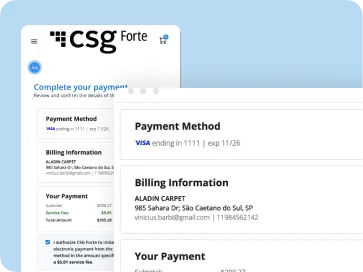
During implementation, surcharges are configured at the merchant location level, apply only to eligible credit cards and are passed in a dedicated field on the transaction so they can be reported separately.

Surcharge example

A county utility district allows residents to pay water bills online by bank transfer or credit card.

  • If a resident pays a $200 bill with an ACH transfer, there is no additional fee.
  • If a resident pays with a credit card, the district adds a 2.5% surcharge ($5) that appears as a separate line item on the checkout page and receipt.

In states where surcharging is permitted, this can help offset credit card costs, but requires careful compliance with state and card brand rules.


What are convenience fees?

A convenience fee is an additional fee you charge when a payer chooses a payment method or channel that is different from your standard option, such as paying online or by phone when your normal flow is in person or by mail.

Unlike surcharges, convenience fees are not limited to credit cards. They can apply to other methods like ACH or eCheck so long as they are tied to the “convenient” channel or method rather than to the card itself.

Key characteristics of convenience fees

There is no single federal statute that defines convenience fees, but a few patterns are common across card brand rules and state law:

  • Tied to a nonstandard channel or method: A convenience fee is charged because the payer uses a channel that is different from your normal flow, such as paying a tax bill online instead of mailing a check.
  • Often a flat fee: Many organizations use a flat dollar amount (for example, $2.95 per transaction) rather than a percentage, especially on higher‑value items like tuition or tax payments.
  • Channel restrictions: Some card brands limit when and where convenience fees can be used. For example, certain Mastercard rules allow specific types of convenience fees mainly in verticals such as government, education and tax.
  • Disclosures and fairness: Just like surcharges, convenience fees must be disclosed before the payer completes the transaction and must be reasonable in light of the service you are providing and applicable state law.

CSG Forte’s platform supports convenience fee models across channels, with split funding and detailed reporting to ensure compliance and transparency. They offer the ability to absorb the fee yourself, pass it through to the payer or split it, depending on your program design.

Convenience fee examples

Common U.S. examples include:

  • A city that normally collects property taxes by mail adds a flat convenience fee for paying online with a card or ACH instead of mailing a check.
  • A property manager that typically receives rent checks in an office charges a convenience fee for tenants who prefer to pay by phone with an agent.
  • A healthcare provider that normally accepts in‑office payments offers an online portal with a small convenience fee to offset the cost of hosting and maintaining digital channels.

In each case, the fee is associated with the convenience of a different channel, not solely with using a credit card.


Convenience fees vs surcharges: compliance and key difference

Both fee types help you manage payment costs, but they differ in how they work operationally and how payers experience them.

Who and what they apply to

  • Surcharge: Applies only to eligible credit card transactions and is directly tied to card acceptance costs.
  • Convenience fee: Applies when a payer uses a nonstandard channel or method (such as online, IVR or phone) and can apply to cards or other methods, depending on rules.

How the amount is set

  • Surcharge: Nearly always a percentage of the transaction, capped by card brands and in some states by statute.
  • Convenience fee: Often a flat dollar amount per transaction, sometimes a small percentage, subject to card brand and state guidance.

Where they are allowed

  • Surcharge: Not legal in every state and subject to detailed notice, cap and line‑item rules.
  • Convenience fee: Generally permitted when properly disclosed and structured, but some states define when you can charge them and how much you can charge.

Customer perception

Research suggests cardholders are more tolerant of clearly disclosed fees than surprise charges, especially when they understand that other fee‑free options (like ACH) are available. Many organizations find that convenience fees, framed around an optional channel, are easier to explain than surcharges that attach directly to card usage.


How to choose the right fee strategy

There is no single “right” answer. Instead, the better option depends on your goals, your vertical and your payers.

Scenarios where a surcharge might fit

A surcharge can make sense when:

  • Credit card volume is high and card costs are putting real pressure on margins, especially in thin‑margin operations such as utilities or public sector.
  • ACH or check alternatives already exist and are easy for payers to use, so customers who want to avoid the surcharge can switch channels without much friction.
  • State law clearly permits surcharging for your locations and your legal team is comfortable with the requirements.

Example: A utility that already offers a full ACH and bank draft experience decides to add a compliant credit card surcharge in allowed states to offset card costs while investing more in digital self‑service for ACH.

Scenarios where a convenience fee might fit better

A convenience fee is often the better choice when:

  • You want to recover the cost of offering extra channels, not just card costs. For example, supporting staffed phone payments or a high‑availability web portal.
  • Your customer experience team is wary of a fee that appears to “penalize” card usage directly, especially in sensitive contexts like healthcare or rent collection.
  • You operate across many states and want a slightly simpler legal profile than a full surcharging program, while still giving payers fee‑free options like ACH, mail or in‑person payments.

Example: A property management firm that typically receives rent checks and ACH transfers adds an online card option with a small convenience fee, while keeping ACH and check free. Tenants get new options, and the firm covers some of the incremental cost of digital and card acceptance.


How CSG Forte Can Help Build Your Strategy

CSG Forte supports both convenience fee and surcharge programs, but they cannot be combined on the same transaction and must be configured carefully to align with card brand rules and state law.

At a high level, Forte can help you:

  • Design a fee strategy that aligns with your goals, vertical norms and payer expectations across channels like web, POS, IVR and SMS.
  • Configure either surcharges or convenience fees at the appropriate merchant locations so that applicable fees are calculated and passed through consistently in the transaction data.
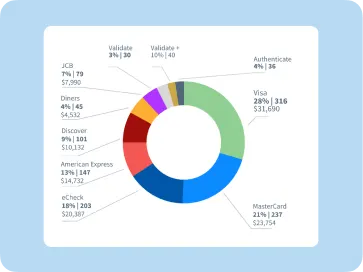
  • Report on fee performance so you can see how card mix, fee revenue and channel usage change over time, and adjust your strategy as needed.

Because CSG Forte works across acquiring, bill payment and payer engagement, you can approach fees as part of a broader payments strategy instead of a one‑off change at the gateway.

If you are evaluating whether a surcharge, a convenience fee or another approach is right for your organization, CSG Forte can help you weigh your options and design a program that balances compliance, cost control and customer experience. Our modern platform supports both convenience fee and surcharge programs, helping you design a compliant strategy that fits your business and customer needs.

Contact our team of experts to design a compliant convenience fee or surcharge strategy that fits your organization.


Frequently asked questions

  1. Can I charge both a convenience fee and a surcharge on the same transaction with CSG Forte?
    No. CSG Forte supports both convenience fee and surcharge programs, but they cannot be combined on the same transaction. Each program must be configured separately and aligned with card brand rules and applicable state law.
  2. How does CSG Forte’s convenience fee pricing work?
    With CSG Forte’s convenience fee pricing, the transaction is processed as two charges: one for the principal amount and another for the service (convenience) fee. The principal amount is funded directly to the merchant, while the service fee is funded to the processor, helping cover processing costs without additional billing to the merchant.
  3. What channels and payment methods can CSG Forte support for convenience fee programs?
    CSG Forte can support convenience fee models across multiple channels—including web, IVR, SMS, in‑person POS and kiosks—and for various methods such as cards, ACH and eCheck, as long as the fee is tied to the nonstandard “convenient” channel or method rather than the card itself and remains compliant with card brand and state rules.
  4. How does CSG Forte help me design and maintain a compliant fee strategy?
    CSG Forte helps you design, configure and monitor fee programs by:

    • Aligning your strategy with vertical norms and payer expectations.
    • Configuring convenience fees or surcharges at the merchant/location level so fees are calculated and passed consistently in transaction data.
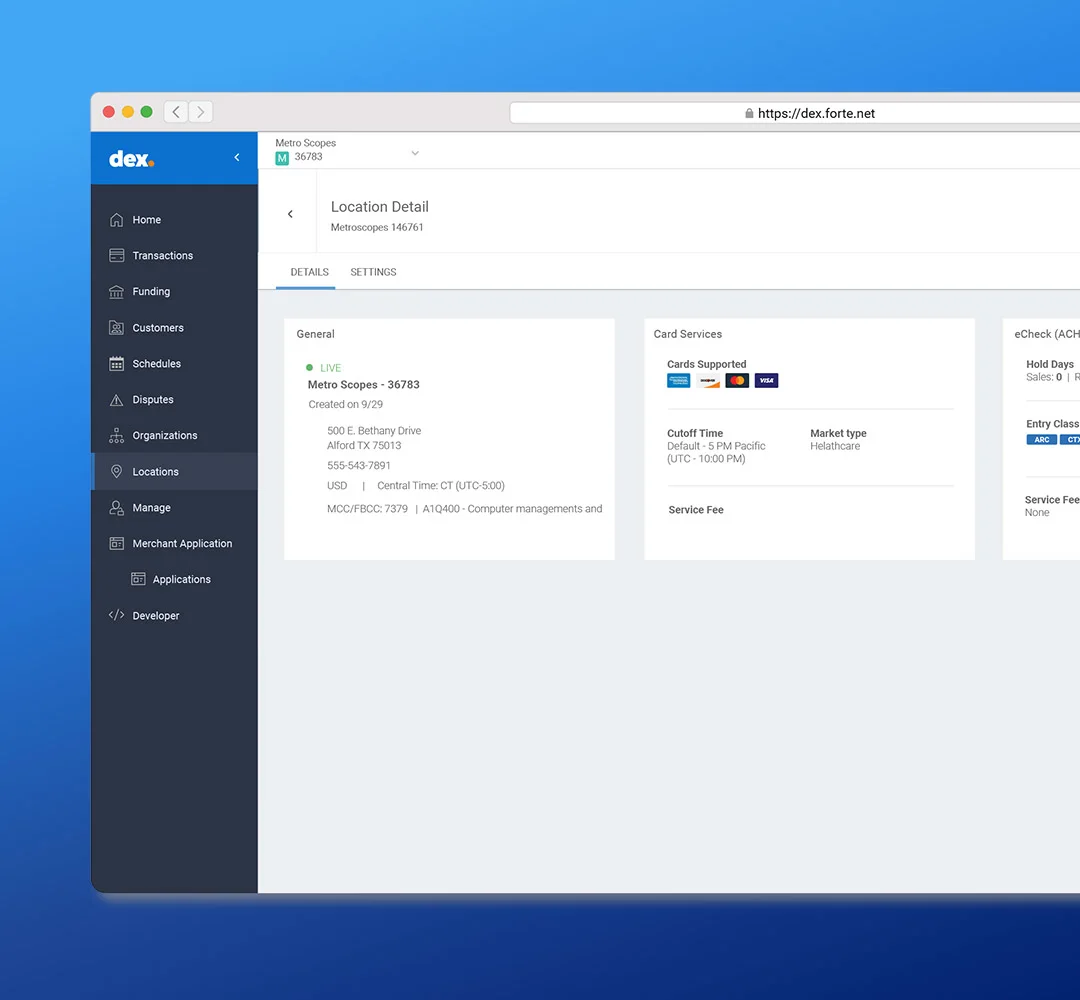
    • Providing reporting through Dex so you can track card mix, fee revenue and channel usage over time and adjust as regulations or business needs change.
      You still need to work closely with your legal counsel and acquirer to validate compliance in each jurisdiction.
  5. How does CSG Forte help me design and maintain a compliant fee strategy?
    Yes. In addition to convenience fee programs, CSG Forte supports absorbed-fee models where the merchant pays processing and service fees instead of passing them to payers. This is common in scenarios where agencies or nonprofits want to encourage digital adoption or temporarily waive fees (for example, Mecklenburg County absorbing convenience fees during COVID-19 so taxpayers could pay online or by phone at no extra cost).