From Patchwork to Platform: An Integration‑First Approach to Healthcare Payments Modernization
Key Takeaways
- An integration-first, embedded payments platform lets health systems standardize payment experiences across portals, clinics, and ISV tools without replacing EHR/EMR systems.
- Payment Facilitation-as-a-Service (PFaaS) models give organizations more control over payment economics, onboarding, and risk while offloading scheme-level compliance and infrastructure to a specialist partner.
- Straight Through Processing (STP) can automate virtual card and portal-based reimbursements from “approved” to “deposited and reconciled” in about a day, improving cash visibility and reducing manual work.
For many healthcare leaders, payments integration has become a sprawling patchwork of bolt-ons.
Every acquisition adds another patient portal. Every service line has its own clinic workflows. Independent software vendors (ISVs) trying to keep up with modernization see no alternative but to bolt payment widgets onto electronic health records (EHR) extensions and revenue cycle tools.
They end up lost in a maze of gateways, vendor portals, and point solutions that all move money—but don’t share data, controls, or reporting. Bolting these features onto legacy bill-pay platforms only compounds the problem, leading to high denial rates, slow reimbursement, and limited digital options for patients and payers alike.
This blog lays out a solution for replacing that patchwork with one embedded payment layer that spans portals, clinics, and ISV tools—often delivered through a Payment Facilitation-as-a-Service (PFaaS) model and powered by CSG Forte’s Straight Through Processing (STP) in collaboration with Optum Financial for reimbursements.
The result? You get better cash visibility, security, and auditability, without a rip-and-replace of your clinical systems.
Why patchwork payment stacks are now a strategic risk
When payment infrastructure grows organically, it quietly raises both financial and operational risk:
- Fragmented cash visibility: Each gateway, portal, and processor has its own reporting. Neither your internal accounts receivable team nor industry regulators can see a single cash position across organizational hospitals, clinics, and joint ventures. Reconciling card, ACH, virtual card and portal flows becomes a manual, multi-week exercise.
- Slow, unpredictable reimbursement: Legacy virtual card processes and mailed remittances routinely stretch insurer money from “approved” to “deposited + reconciled” over 30–90 days, while staff hand-key card numbers and re-key payments into EHR systems.
- Inconsistent controls and PCI scope: Different entities stand up their own payment vendors and workflows. Card data shows up on desktops and in local spreadsheets, expanding payment card industry (PCI) scope and increasing audit and fraud exposure.
- Disjointed patient experience: Patients may start in a health system portal, get bounced to a third-party payment page, and then see different options at the clinic front desk or call center. That friction directly hurts collection rates and satisfaction.
You don’t fix this with one more bolt-on portal. You fix it with one embedded payment layer that integrates across your existing systems.
What an integration-first embedded payments platform looks like
An embedded payments platform brings payment acceptance, routing, settlement, and reporting inside the workflows your teams and patients already use—EHR portals, scheduling tools, telehealth apps, revenue cycle workstations, and more.
In a PFaaS model, your health system:
- Owns more of the payment journey (branding, pricing, onboarding, basic configuration)
- Delegates heavy-lift functions—sponsor bank relationships, PCI Level-1 infrastructure, KYC/KYB, fraud tooling and scheme compliance—to a specialist partner
- Integrates via modern REST APIs and web components, so payments live inside your existing portals and ISV tools instead of redirecting out to generic checkouts
The key is integration-first design: you don’t rip out core EHR/RCM systems. You standardize how money moves around them.
One payment layer, many workflows
With the right PFaaS-based platform, “one payment layer” becomes the shared fabric for very different workflows:
1. Patient responsibility across every channel
- Patients can pay from text-to-pay links, portals, mobile apps, IVR, in-clinic terminals, or call centers—all through the same tokenized card profile and gateway.
- Staff don’t need different processes by department or campus; they use consistent tools and tender types wherever they work.
- Finance sees one consolidated ledger for patient payments, with reporting by facility, service line, payer, and channel.
2. Insurer and payer-portal reimbursements via Straight Through Processing
Today, many of your virtual card reimbursements still flow through physical mail, payer portals and manual keying. STP automates that last mile:
- Payers continue to issue virtual cards as they do today.
- Card and remittance data are sent electronically to CSG Forte, processed automatically and deposited to your bank—typically about one day after approval, not 60–90 days later.
- Payment and remittance data land together in your posting and finance tools, supporting auto-posting and cleaner reconciliation where integrated.
Because STP is part of the same embedded payment platform, your teams get a single view of both patient and payer cash. This integration allows for consistent controls and audit trails, without changing how payers adjudicate claims or ripping out practice management systems.
3. ISV and ecosystem tools
Your organization already relies on ISVs for specialty workflows—oncology, orthopedics, telehealth, patient engagement, and population health to name a few.
With a PFaaS-backed platform:
- ISVs embed the same payment rails into their applications, using developer-friendly APIs and SDKs.
- Sub-merchants (clinics, foundations, JV entities) can be onboarded and configured under your governance model, not each vendor’s ad-hoc rules.
- You preserve a single set of risk policies, reporting and settlement rules even as your digital ecosystem grows.
This is healthcare payment integration at the platform level: different software, one payment layer.
Why PFaaS makes sense for large health systems
For multi-hospital systems, PFaaS hits a practical middle ground between “just another gateway” and becoming a fully registered Payment Facilitator yourself:
- Faster time to value: You can launch embedded payment experiences quickly—without building a full acquiring, risk, and compliance stack.
- Configurable control: Decide which functions you keep (e.g., pricing strategy, merchant support, data ownership) and which your PFaaS partner runs (e.g., underwriting, chargeback handling, scheme compliance).
- Improved economics: Instead of small referral fees from disparate processors, you consolidate more transaction margin onto a single platform and can reinvest savings into patient experience or margin protection.
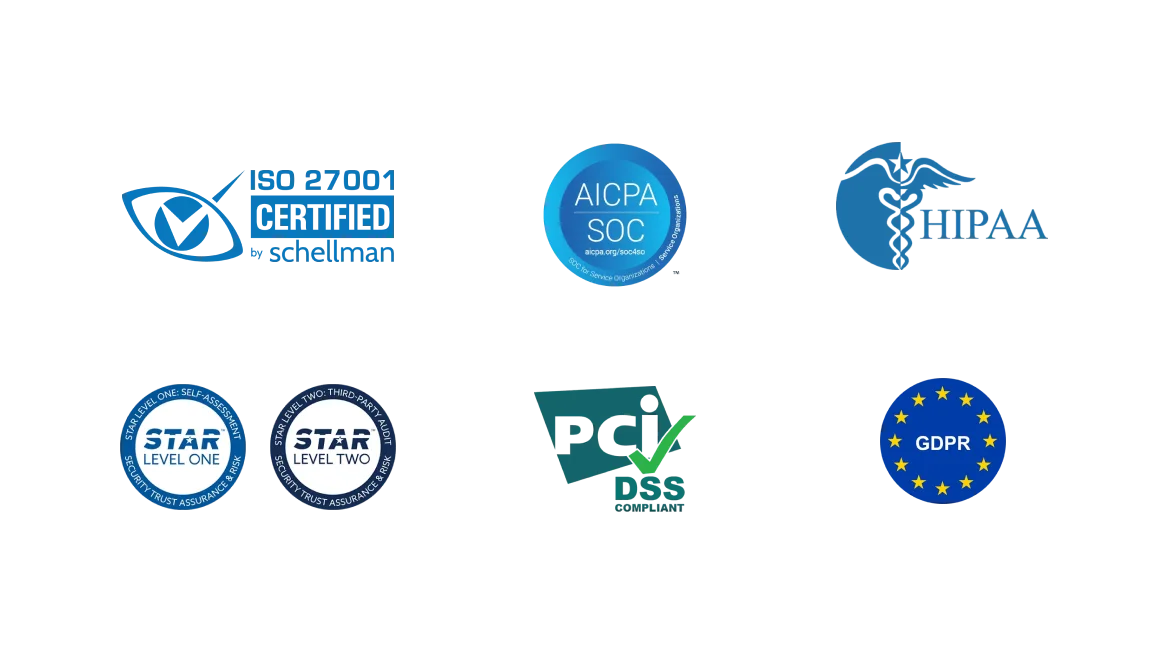
- Risk and compliance by design: A healthcare-ready PFaaS partner brings HIPAA-aware, PCI-Level 1 infrastructure, tokenization, encryption and monitoring that reduce your PCI scope and strengthen audit posture.
Proof in practice: an embedded payments partner scaling healthcare payments
A useful way to pressure-test your “single layer” strategy is to look at environments that must scale across many payment flows and merchants.
In CSG Forte’s long-running partnership with National Cash Management Systems (NCMS), NCMS shared metrics from a merchant client accepting online healthcare payments—including average monthly transaction growth from 40,820 (2021) to 91,831 (2021–2025) and monthly transaction totals rising from $3.93M to $12M.
The broader theme: consolidation onto a stable, single-source platform helped simplify operations and support sustained growth.
For health systems, the takeaway isn’t “copy an ISV model.” It’s that standardizing the payment layer is what makes it possible to scale workflows cleanly—without multiplying gateways, processors, and reporting silos.

Where to go from here
If you’re done funding a patchwork of gateways, bolt-on portals, and payer workarounds, the next step is an integration-first embedded payment platform delivered through CSG Forte’s Payment Facilitation-as-a-Service and Straight Through Processing.
Explore how PFaaS can give your health system one payment layer across portals, clinics, and ISV tools—with better cash visibility, stronger security, and cleaner audits—by visiting our PFaaS webpage and connecting with our team.
FAQs
What is healthcare payment integration, and why does it matter for large health systems?
Healthcare payment integration is the practice of connecting payment acceptance, settlement, and reconciliation directly into clinical, billing, and patient-facing systems so transactions flow straight through without manual re-keying or swivel-chair work. For large health systems, this reduces administrative overhead, improves cash visibility, and supports a more consistent patient experience across sites and portals.
How does Payment Facilitation-as-a-Service (PFaaS) support embedded payments in healthcare?
PFaaS allows a health system or its ISV partner to act like a payment facilitator in the provider’s eyes—owning more of the payment experience and economics—while a specialist provider handles core acquiring infrastructure, PCI-compliant processing, and much of the compliance stack. This is well-suited to embedded payments in healthcare, where workflows span EHRs, portals, and third-party tools.
Can we embed payments without replacing our EHR or practice management systems?
Yes. Modern embedded payments and STP offerings are designed to run behind the scenes, centralizing card processing, deposits, and remittance data while integrating with existing EHR, PM, and RCM tools over time. That means you can standardize your payment layer without a big-bang system replacement.
How does STP help with virtual card and payer-portal reimbursements?
STP automates the last mile of virtual card payments by routing card and remittance data electronically to a payments partner that processes the card, deposits funds, and delivers aligned remittance data for posting and reconciliation—often in about one day instead of 30–90 days. This reduces manual mail, keying, and “mystery deposit” research.
What should healthcare leaders look for in an embedded payments partner?
Leaders should prioritize: healthcare-grade security and compliance (HIPAA, PCI DSS, HITRUST-aligned), proven integrations with EHR/EMR and revenue tools, support for PFaaS and STP models, and clear reporting that link payment activity to remittance and GL outcomes.